No Results Found
The page you requested could not be found. Try refining your search, or use the navigation above to locate the post.

Over the last ten years, we have been trying to get Mother’s Day right, and I am still not sure we have. In terms of covers, Mother’s Day is our biggest day of the year. At our busiest pub, we had 753 booked this year. Sadly, we served only 688, resulting in a day that netted us £18k, which was slightly less sales than Christmas day, when we served around 230 covers.
It has become clear that there are several specific challenges when it comes to Mother’s Day, which can perhaps be better remedied on normal trading days. The first is no-shows. Despite ringing every customer up beforehand, our no-shows were still around 9%.
Next year, I think we will have to start taking deposits, and we are switching to LiveRes to enable us to do that. The reason no-shows are a bigger problem on a day like Mother’s Day, is that walk-ins are few and far between – it is too much of a risk. On other days, when we are busy, people not turning up matters less because we are a big enough restaurant and can compensate with walk-ins. So, it is likely we will start taking deposits next year, so that we do not lose that 9% again.
The second challenge on Mother’s Day is price. We are in a constant dilemma about what to offer. At one end, we can stick to our Sunday roast pricing, but we seem to then waste the opportunity of being full. If our regulars were the people coming to us on Mother’s Day, that would be great, but it tends to be those who visit less often and are looking to go somewhere slightly different than usual. It feels like a day where everyone trades up!
Is the right approach to have a more expensive Mother’s Day menu? Do we offer three courses at a fixed price, or maybe two courses? I think our reluctance comes from knowing there are likely a fair number of people who do not want to eat that much. Our preference is to have a separate Mother’s Day menu, which we send out early with each booking so that our customers are well informed ahead of time. Better planning and organisation are crucial for days that feel slightly harder to forecast.
We also want to look into Mother’s Day gifts to extend our offering – what about flowers and fizz? What about a box of chocolates on the table to take home? It feels as though creating a whole Mother’s Day experience and going beyond the meal is something we ought to do. It is certainly another one to consider for next year!
With all this in mind, what could we take next year? Deposits could add 10%, an enhanced menu could add another 10%, and offering more of an experience could add 5%. We probably won’t get it all right, but there is a decent chance of growing by 15% next year, which is another £3k we need.
I’ll let you know how we do!
In our pub business we have recently been recruiting for a Deputy General Manager. During our interviewing, it has been fascinating to learn why so many staff want to leave the largest companies in the sector and come and join little old us. We should not really be able to compete with larger businesses, but we do, and I have been curious in finding out why.
We lose on many things, particularly staff development and benefits, where bigger companies do a great job. But we win in two more key areas. Firstly, the team ethic of a smaller business, with Directors being visible and involved, which also means we get the small things done much more quickly, particularly regarding repairs. But where we really win in comparison to the Goliaths, is in managing our labour.
It should not come as a shock that as an industry, we really care about customer service. While there are many factors that contribute to the productivity levels of our teams, I think that staffing levels are perhaps one of the most significant.
Some of the candidates we spoke to voiced frustration over the fact their employers chose to set cash targets as means of budgeting their labour over the Christmas period. The staff felt they would have done much more than the target, but as a result of it, were not given enough resource to do so.
It is always a bit of a shock, and quite fascinating to me when I hear about bigger companies managing their labour costs with the bluntest of instruments. Of course, cost management is at the forefront of every operator’s mind, particularly with NLW increases looming. Simply setting a cutthroat budget to slash costs will also slash sales. We will not win over the customer if we deliver bad service, and more importantly, we will not win over our people if we are seen to act in not only an illogical way, but also in a way that impacts their job satisfaction levels. We have all seen what happens next: they either leave the company, or more worryingly, the industry.
Managerial behaviour in a devolved, people-intensive industry can be really difficult to get right. It is a bit of a truism to say that we have some great managers, some OK managers, and some poor managers. We need to find the best way to let our best managers manage, and to train our worst managers to be better at their job. In truth, it is likely this means taking different approaches for different people. There is something I refer to as ‘lowest common denominator management’ – which means adopting management practices that cater to your least experienced people, as opposed to just your best or average people.
Our most trusted and experienced managers can be encouraged to perform even better; others, who perhaps have less experience in the business, may require a more hands-on approach until they get there.
Labour is the sharp end of our industry. If you demand a 75% food gross profit, the team will accept that your economic model is such that it is the right thing to do. They might baulk a bit more at pricing when they are the ones that get the grief from the customer, but they will also accept that dealing with price increases are part and parcel of the job. However, when it comes to labour, they can see when they are understaffed.
Even if our teams believe they need more staff than what is required, it is our responsibility to spend time explaining why the way we have planned our teams is right, and how they can be more productive in their role to achieve the same goals.
This is what companies are potentially failing to do. We work in an industry where people want to understand more, and where, when explained, they are more motivated and accepting of the requirement.
We need to explain when a two on shift is better than a three on shift; why we do not need a pot wash at quieter times; why certain tasks are to be thought of as slack tasks and not as fixed tasks. Sometimes, in our rush for a result we forget these basic processes.
I have no doubt that we will need to train and explain to our new team how we work, what we care about, and how we deliver in our own way.
The latest sales data from S4labour has revealed that hospitality sales were up 11.6% overall in March, compared to the same month last year.
Outside of London, sales saw an increase of 13.4% year-on-year, ahead of the capital which saw a marginal uplift of 4.1%.
Across the country, sales in dry-led sites were up 12.4% and 10.2% in wet-led businesses.
Chief Growth Officer at S4labour, Richard Hartley, added: “This year, March was a five-weekend month and Easter was earlier, so March saw the trading of Good Friday and the rest of Easter weekend. As a result of the bank holiday and additional weekend, an increase was to be expected, albeit it is still a pleasant surprise to see them up by over 11%. The increase here, and in February (3.5%), are indicators of a promising start to 2024.”
Company Name: Gardner Garages
Business Type: Forecourt and convenience
Date: March 2024

“The Gardner family have been fuelling the Gloucestershire motorist for over 50 years.”
Gardner Garages joined S4labour almost a year ago. The forecourt business own and operate 6 petrol stations (Texaco and BP fuel) and one town centre convenience store, all with Londis and Budgens fascia.
Emma the Managing Director of Gardner Garages Limited has ran the business for over 25 years. Emma oversees the operations of the company, ensuring that the businesses run efficiently and cost effectively while ensuring they get the most sales and profit from their sites as they can.
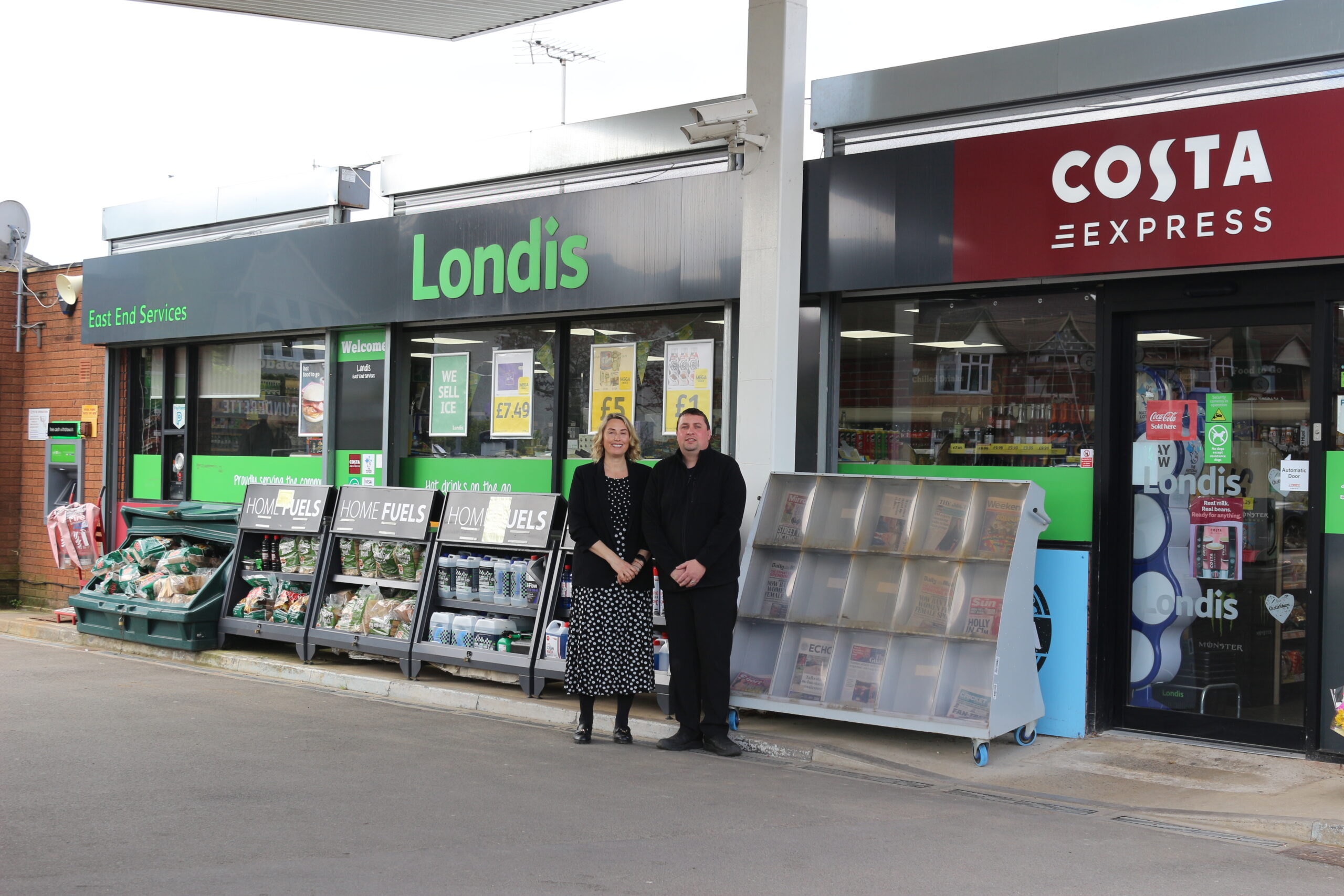
“We wanted something that made running the business proactive rather than reactive and can address any concerns with labour costs with Managers before they become an issue. Since we have started using S4labour we have far more day-to-day control over labour costs as we can see all seven sites on one dashboard and act accordingly.”
One of the major problems managers faced prior to using S4labour was that everything was done manually- rotas were produced on excel worksheets, printed out and displayed on the staff noticeboards. Payroll was manually processed using Sage, and was then imported into excel, which was then emailed across on payroll processing day. This made the process time consuming and often resulted in input errors.
Gardner Garages found communicating shifts confusing as they are subject to change, making it difficult to communicate over texts messages. Doing things manually and on spread sheets made it difficult to get real visibility over how much they were spending on labour. Since using S4labour the business can see fully costed rotas which includes holiday pay, NI etc and the system is the one version of the truth everyone can trust.
With the introduction of S4labour, the team are more engaged with work as they can see their shifts on their phones at any time, there are no grey areas about start and finish times because time & attendance are automated. Employees can manage and requests on their phones when it is convenient, rather than during a shift. This makes tracking their actual hours worked a lot easier.
The holiday requests and management on the App has also been an extremely efficient and useful tool. This feature has helped with scheduling holidays and ensuring that the whole team can see holidays, which has resulted in a smoother operation of the business.
Most importantly this has helped the business avoid unexpected costs and ensures accurate payroll. Before S4labour Gardner Garages had never considered a system for payroll. An in-depth demonstration of the system helped them understand how it can the positive impact the overall working of the business.
Emma also commented “We talked to fellow retailers that had already implemented S4labour and who shared their positive experiences with us. The S4labour team were a great ambassador for the system and were excellent in supporting us in the early implementation stages”.
Since making S4labour a part of their business, Gardner Garages has more time to prioritise customer satisfaction, as they have more time to focus on activities that generate profit rather than doing administrative work.
Emma further commented on how investing in S4labour has led to increased staff retention: “We have invested in our employees this year with the implementation of S4labour. The system has had a positive impact on our relationship with our employees as it has demonstrated greater engagement and efficiency for us all”.
The page you requested could not be found. Try refining your search, or use the navigation above to locate the post.
As a bit of a labour management nut, I often find myself frustrated by the people-approach of many operators across our industry, bemoaning the fact that we are amateurs when we should be professionals. I worry that the constant increases to minimum wage will cripple our industry and force prices up to levels that make going out unrealistic for customers. I also worry that staff cuts to save money will, in the end, destroy service and have the opposite impact. So, you can imagine my joy this week when I was able to spend time in a restaurant that runs operations in the top 1%. Instinctively, they were filling quieter points in the shift with non-sales-driven tasks, which we refer to as ‘slack’ tasks. Kitchen prep was being done in the afternoon, and they already knew not to have a pot wash during these troughs in service. And, they had minimised management tasks, doing so all in their stride. Their labour percentage would be the envy of the rest of the industry, including me! I really cannot tell you how impressed I was. When I started S4labour, I designed a postcard to send to people that said: “earn yourself a holiday”. I was trying to get people to realise that by managing staff cost well, it really was possible to earn enough to take an extra holiday. This was certainly true here. I was reminded that it can be done – excellence can be achieved. It just depends on how much effort and energy you want to put into getting there. Of course, we are all going to have to put more energy in over the next year, that is no secret. In an ideal world, we want to grow profits and cut costs as much as we can, without compromising our service or overstretching our teams. Saying as such may sound like a bit of a pipe dream to some, but it is entirely possible. The next year will be hard, but it does not need to destroy our profits. Finding the areas in your business where you can improve operations and then constantly applying them will make you better, even if it is incrementally. This particular business had two massive advantages to drive their excellence. Firstly, the management team knew how to cook – no chef was going to tell them how to run a kitchen. Any new chef gets inducted by them, and then taught the right practices to adopt. This kind of positive habit is exactly what I talk about when I refer to operational excellence. Embedding effective behaviours into your business from the outset, guarantees that specific ways of working stick. The second big advantage was that the management of the business ran shifts everywhere. They did not tell others what to do, they just did it, and led by example. Telling people what to do only gets you so far – working with them, doing it yourself, and showing them what ‘good’ looks like always achieves better results. Setting your sights on excellence is what we have to do, and it can be done. Alastair Scott is CEO of S4labour and Owner of Malvern Inns.
The latest sales data from S4labour has revealed that hospitality sales were up 3.5% overall in February, compared to the same month last year.
This uplift was driven by sales in London, which saw an increase of 8.5% overall. Outside of the capital, overall sales were up 2.3% year-on-year.
Wet-led sites across the country saw a decline of 0.2%, however, dry-led sites were up 5.6%.
Chief Growth Officer at S4labour, Richard Hartley, commented: “This year being a leap year meant that there was an additional day of trading in February, which has played its part in the year-on-year increase, though it is not entirely responsible for the uplift.”