June sales see a 7.8% increase led by London

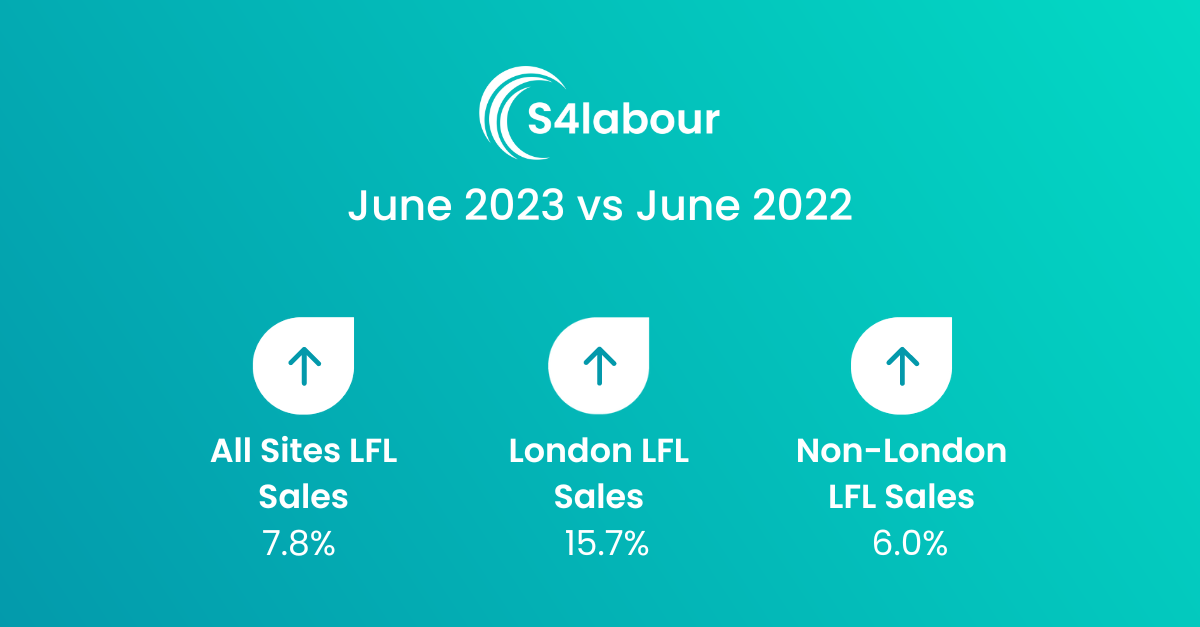
In June hospitality sales saw the highest year-on-year increase so far in 2023 with a 7.8% uplift, according to the latest S4labour data.  

This spike is largely due to London sales, which were 15.7% ahead of 2022 levels, whilst non-London saw an uplift of 6.0%.  

Food and drink were split fairly evenly outside of London, with 6.2% and 5.9% year-on-year growth respectively. The capital was driven by a 16.2% increase in drink sales, with food sales growth sitting just below that at 14.9%.  This comes after temperatures were consistently high throughout June, reaching 32 degrees in some parts of England. It’s likely many spent a great deal of time outdoors, enjoying food and drinks in pubs and restaurants.  

Chief Growth Officer at S4labour, Richard Hartley, commented: “In line with rising temperatures, this is what we would expect to see as this June was the hottest to date. This quarter has seen solid growth on 2022 sales, with April at 3.3% and May at 2.7%. As we move into the second half of the year, good weather and holidays should continue to work towards offsetting inflation and rising interest rates.” 

Ben Hood joins S4labour as non-executive director

Ben Hood, co-founder and former chief executive of Fourth, has joined the board of S4labour as non-executive director. Hood joins S4labour after 20 years at Fourth, with immediate effect. His appointment is part of the next stage of S4labour’s journey to support the hospitality sector.

Alastair Scott, chief executive of S4labour, said: “I feel privileged to have someone like Ben join our team. He will be a great help to us as we continue to create unique and mission-critical tools for the industry. S4labour is a very different and exciting proposition for him and together we will be able to make the best decisions we can to support this wonderful sector.” Hood added: “Alastair and the wider S4labour team really understand the sector and care a great deal about the operators. The level of innovation and ambition is really exciting, and I love how they are going about improving productivity across the sector. They believe in partnerships and service and have some fabulous success stories in such complex times. I am pleased to help them with the next chapter.” 

Propel Women’s Conference: 5 Key Takeaways 

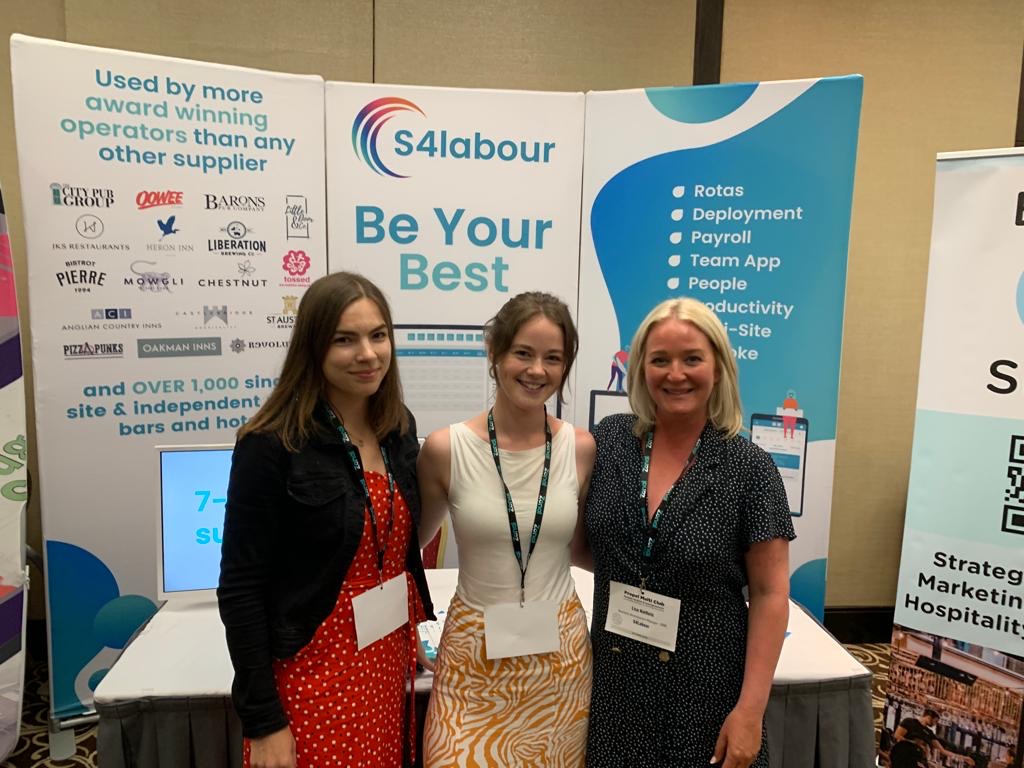
Recently, S4labour had the honour of participating in the Propel Women’s Conference which celebrated women’s resilience, strength, and limitless potential within each of them. This was an inspiring event that beautifully weaved together stories of triumph and failure, candid panel discussions, and incredible networking opportunities.  

Reflecting on the rich insights gained at the conference, certain themes kept coming up repeatedly. 

Here are five takeaways from the event: 

Leadership is a privilege

The best leaders don’t just manage people, they give them a sense of purpose. A leadership role doesn’t inherently make one a leader. The true measure of leadership is the ability to inspire others to achieve things they thought impossible. Authenticity, vulnerability and the will to make a difference are the essence of leadership. 

People and culture first

A thriving business is rooted in its culture, where people form the heart and soul of the organisation. People are the biggest value that businesses have. It costs next to nothing to retain people, but thousands to hire and retrain. And it’s a culture grounded in honesty and clear communication that effectively unlocks the potential of the workforce. 

Lowering the ladder

Helping others seize opportunities is crucial for a thriving team environment. The utopia exists when every member feels motivated and empowered. Remember, there are no ‘bad’ employees – only those who may either be misplaced in their roles or lack motivation. 

Change is normal

In the aftermath of Covid, organisations faced significant challenges and had to adapt rapidly. The industry continues to face uncertainties, and change is an inevitable constant. The ability of a leader to guide their team through these waves of transformation is invaluable. 

Prioritising EDI

EDI should be a bigger part of business strategy and not just a tick-box exercise. Leaders need to ensure they’re fostering a culture of inclusivity. 

After the Propel Women’s Conference, there’s an undeniable sense of inspiration. Let’s carry forward the momentum and continue to support and empower each other. If the idea of fostering a culture that puts people first resonates with you, discover how S4labour can help enhance team engagement, improve retention rates, and empower people to be their best.

Book a demo now to find out more!

May sees modest sector sales uplift led by food-focused sites, growth lower than expected

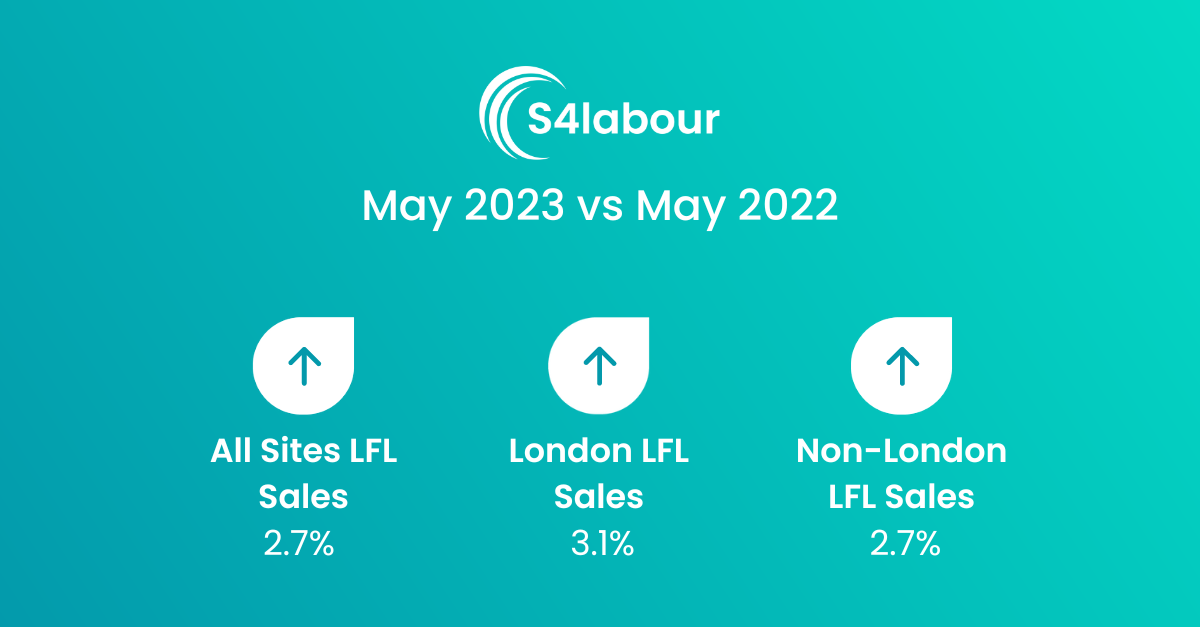
Across May, hospitality sales saw a slight uplift of 2.7% compared to the same month last year, according to the latest S4labour report.

Between London and non-London, the growth was split relatively evenly, with a 3.1% and 2.7% like-for-like increase respectively.

The data also suggests that May’s overall increase was driven by food-focused sites, which were up 5.7% compared to last year, whilst sales in drink-focused sites were down by 0.9%.

Chief Customer Officer at S4labour, Chris Welham, added: “May marks the second positive month in a row, however, with warmer weather and three bank holidays, growth is lower than operators would have expected and falls below the rate of inflation. Dry weather and longer weekends seem to have encouraged at-home drinking, rather than visits to pubs. Operators will be hoping for sunshine over the summer months to take advantage of rising consumer confidence.”

A New Guide to Holiday Management in Hospitality

When holidays approach, it’s easy to get lost thinking about footfall and revenue, without laying the groundwork to grow both of these effectively. 

During busy periods, having the right amount of staff on shift at the right time, whilst maintaining labour percentages can be really difficult. 

Trying to scrimp on your labour spend by simply removing hours from a rota will end up costing you more in missed sales. Likewise, overspending on labour to play it safe will reduce productivity and eat into your profitability. 

Spring and summer are pivotal points for the industry, with numerous bank holidays and school holidays from March to August. Scheduling your teams effectively means finding the balance of having enough staff for peak periods, whilst sticking to your labour budget. You want to be flexible and show attention to detail. 

This article will serve as a guide for holiday management in hospitality.

First of all, you need to think about the kind of problems to consider like: 

  • Time off requests
  • Requests for additional hours 
  • Extended holiday hours or early closings 
  • Planning for events

All of these are to be expected during busier periods when there are variations in trade.

The first step in a good labour management process is to forecast demand based on historical sales data. Having visibility of last year’s like-for-likes will serve as the best indicator of your future labour needs. You can identify peaks and troughs, helping to determine when you need people in, and when you need to scale back on labour. 

By getting advanced rotas in place, employees can see shift plans easily, meaning any issues can be spotted and resolved. 

When teams are using one system as a point of truth, it is much easier to collaborate. Managers are able to communicate rotas and employees can volunteer for available shifts, meaning labour demand is met. 

Synchronising holiday calendars also allows advanced rotas to stay true to availability on key dates. When scheduling rotas during peak times, you need staffing levels right. There’s different skills required for front of house than there are for back of house, so making sure you have the right people at the right time is really important. 

Planning for weather variations is also a big factor to consider when planning your labour. Sunny bank holidays make for even busier shifts – take last year’s Jubilee celebrations in June, when sales were up 14% compared to the week before. 

The next factor to take into account is managing slack tasks effectively. Using tools that tell you how you should be staggering shifts to reduce labour costs will ensure that productivity does not slip and eat into profitability. 

Likewise, under scheduling and stretching your teams too far will result in a lot of stress hours and poor service. You’ll have kitchen mix ups and long wait times. 

The key is to dedicate the right amount of time to slack tasks, making sure areas are kept clean and tidy, with time to get ahead on prep. 

Every minute that managers spend manually scheduling employees could be better spent on the floor managing staff. Not to mention, manually building, editing and updating on a weekly basis often leads to lots of errors and unbalanced rotas. 

Effective labour management comes down to consistency, without this, costs will be further inflated. Working out your budget based on historical data, and sticking to it, will ensure there are no surprises in payroll, as well as making sure every shift runs at peak productivity. 

Hospitality grows sales in April, with a strong May on the cards

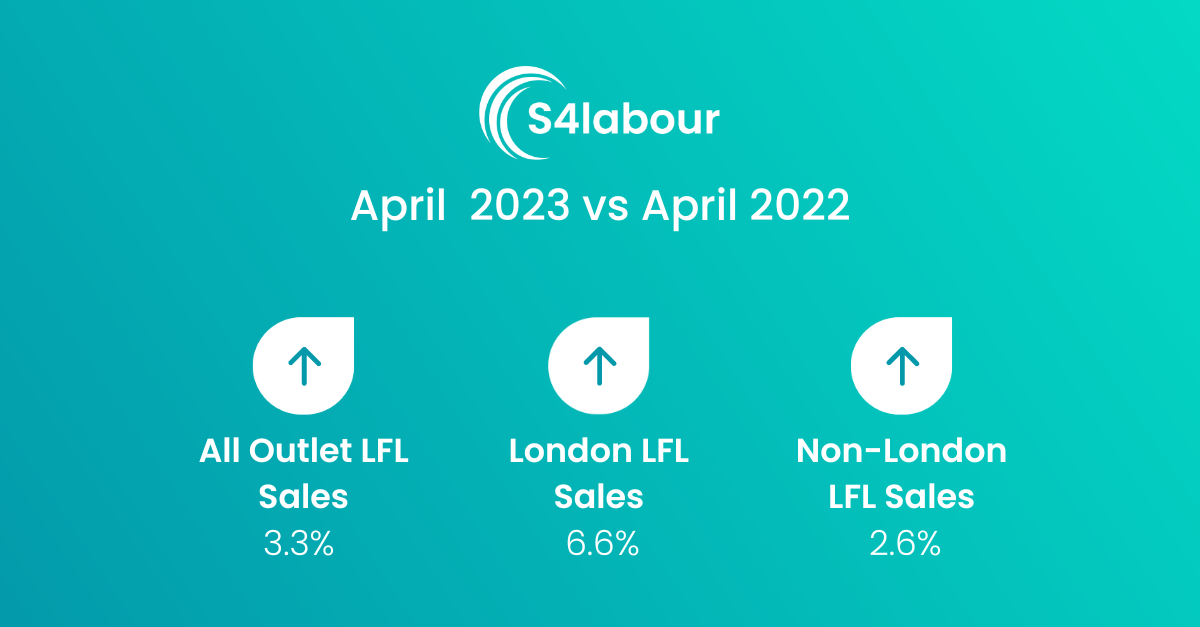
Hospitality like-for-like sales in April were up 3.3% against last year’s levels, according to the latest S4labour report.

Operators have been facing squeezed consumer confidence and an increase to national living wage levels over the month. Although April’s statistics are still below the rate of inflation, its rate is the second fastest so far this year, so this growth is good news for the sector. 

London food sales were up 7.9% driving the capital’s overall uplift of 6.6%. Non-London was also led by food, with an increase of 4.5%. 

May will bring a big advantage and uplift in trading across its three bank holidays and warmer weather, with the Queen’s Jubilee weekend in 2022 bringing a 14% increase to week-on-week sales. 

Richard Hartley, S4labour’s Chief Growth Officer, said: “Amidst what is a tough period for the industry, these figures are positive. With three bank holidays in May, operators across the country will have much stronger trading as consumer interest in eating and drinking out is set to spike, particularly if the weather is good.”